Updated 2026-07-06
AI competitor analysis
When an AI engine doesn't recommend you, it recommends someone. AEO Mantis tracks which competitors appear in the answers to your monitored prompts, how they're framed, and how share of voice splits across your category — with the exact answers as evidence.
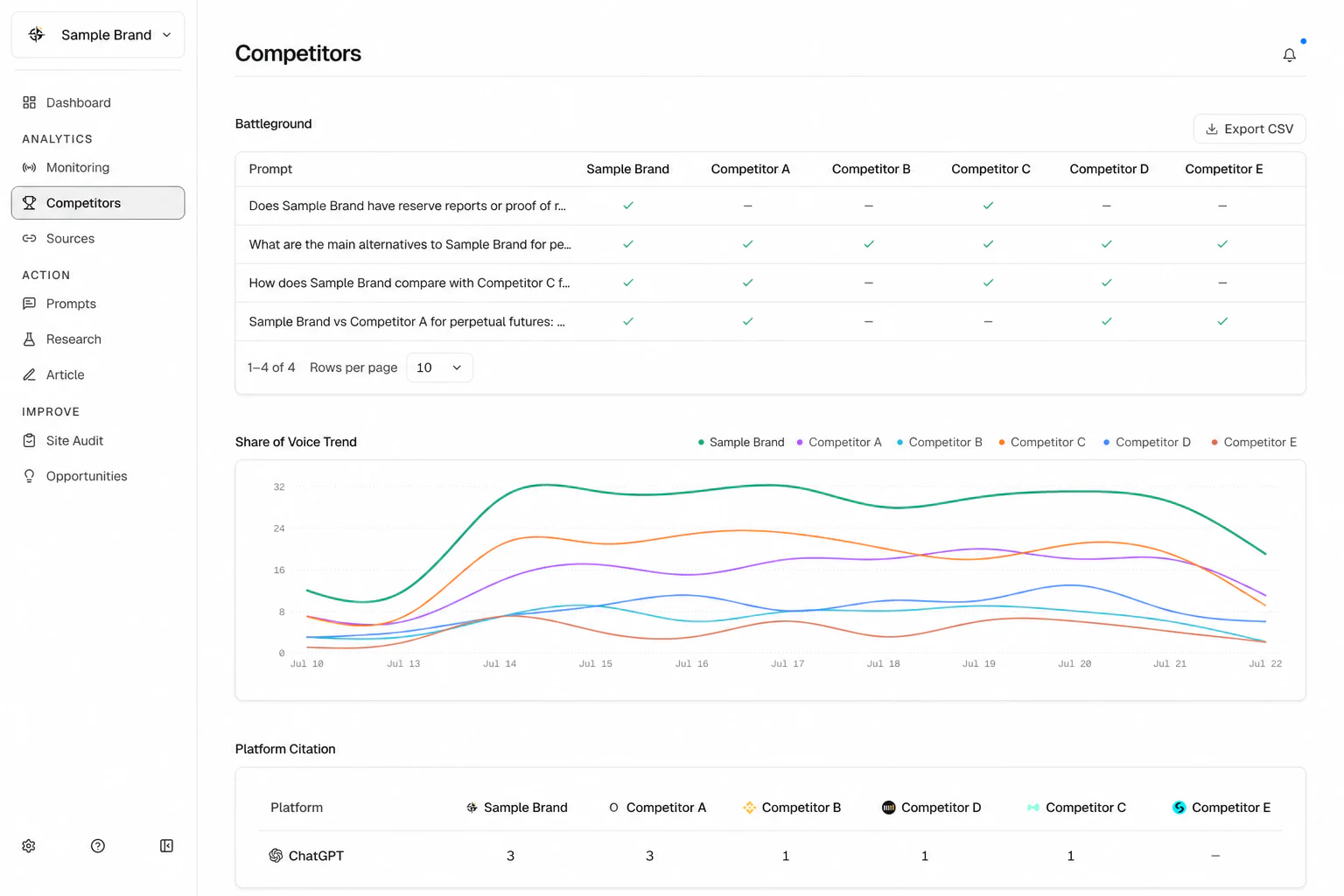
Example: find the ten comparisons you are losing
Sample Brand monitors comparison and category questions against five placeholder competitors. The battleground reveals ten prompts where another brand appears and Sample Brand does not. Instead of treating that as one vague share-of-voice problem, the team can open each losing answer and see the exact topic, platform, framing, and source behind it.
Step by step
1. Define the comparison set
Choose the competitors buyers genuinely compare with you, including known name and domain variants. Changes apply to future monitoring runs while historical runs keep the comparison set they were measured with.
2. Open the battleground
Review every monitored prompt across Sample Brand and its competitors. A checkmark shows which brands appeared in the same answer set; the share-of-voice trend shows whether the pattern is persistent or new.
3. Read the winning answer
Open a losing prompt to inspect the stored response, cited sources, recommendation language, and sentiment. This separates a content gap from a source-authority problem or an unfavorable comparison.
4. Turn the loss into work
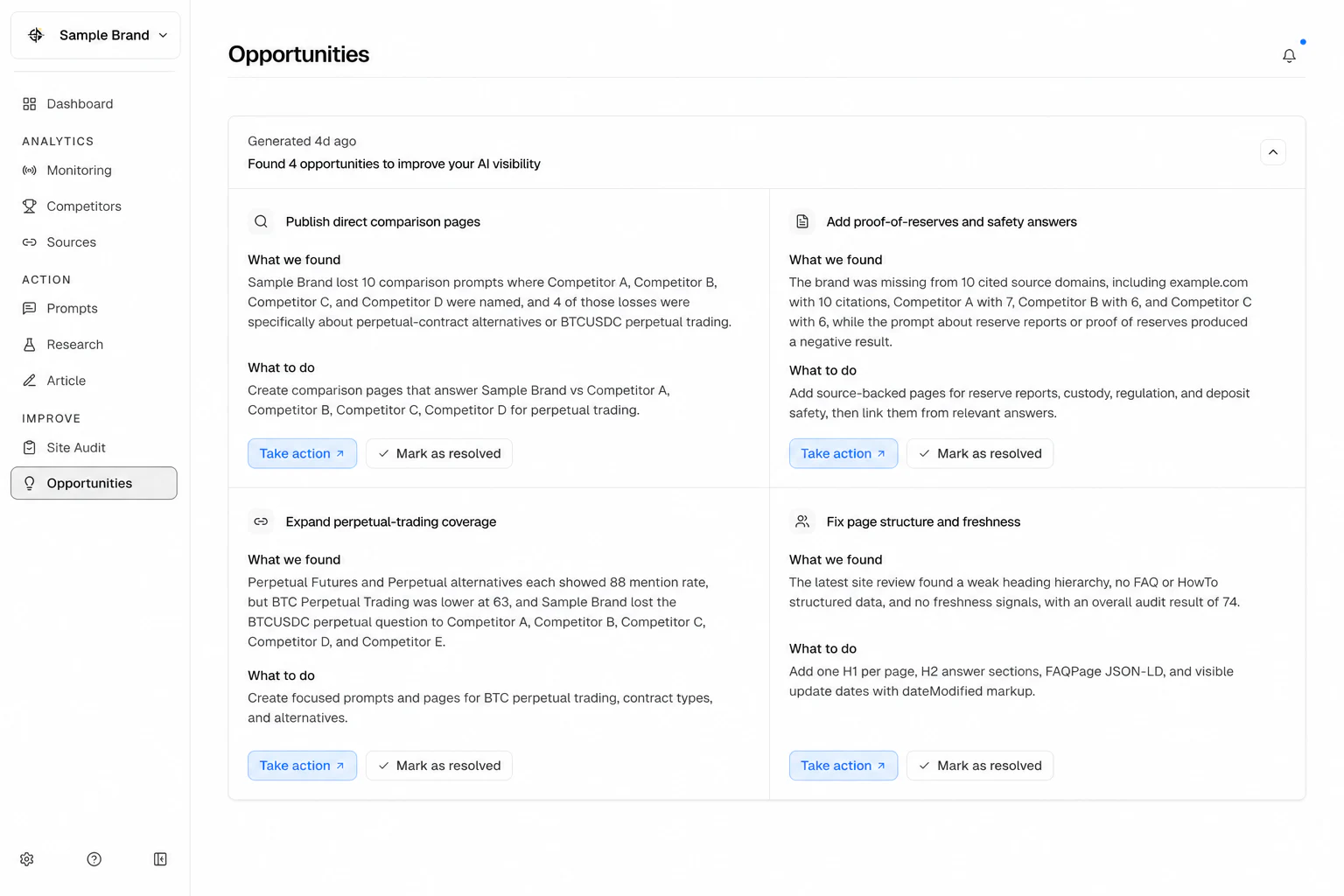
Send the strongest gaps to Opportunities. The resulting item preserves what the system found and recommends a specific fix rather than leaving the team with another chart.
Why this beats manual spot checks
Competitors' AI presence shifts without announcements — a new comparison page, a burst of reviews, a model update. Scheduled tracking catches the drift the week it happens rather than the quarter you notice deals getting harder. And because mentions are matched against configured names and aliases, "HubSpot" and "hubspot.com" don't read as two different competitors.
Use source-backed content generation when the fix is a new comparison or evidence page; use the site audit when an existing page cannot be retrieved or quoted cleanly.
- Competitor mentions tracked across all monitored platforms and prompts.
- Share of voice and battleground views show where the category answer is contested.
- Competitor sentiment analysis shows how engines frame each rival.
- Plan tiers set how many competitors you can track — see pricing.
Frequently asked questions
It depends on plan tier. Adding or removing a competitor immediately affects future runs and the share-of-voice denominator.
Yes — every metric links back to stored answer text and sources.
No. Historical runs keep the competitor set they were measured with; changes apply going forward.